

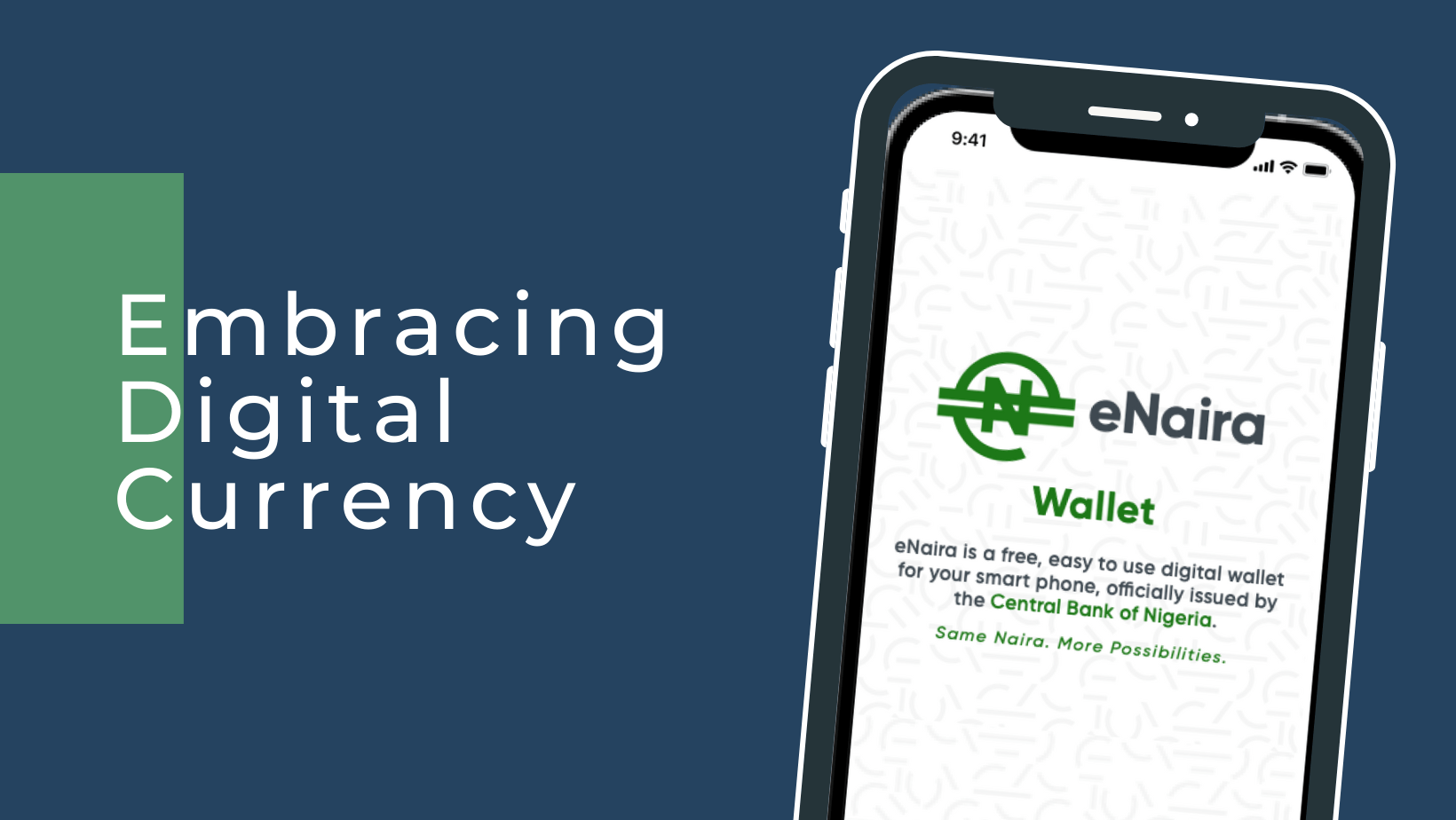
On Monday, October 25, 2021, President Muhammadu Buhari unveiled the eNaira. The President stated at the formal launch in Abuja, Federal Capital Territory (FCT), that the new initiative would help to improve the Nigerian economy and help it keep abreast with global financial trends.
Several prominent financial and economic experts and analysts have praised the policy, claiming that it is a good boost to the country’s growing cashless economy.
Similarly, many youths who make their daily business transactions through various digital platforms have expressed their delight and commended the Federal Government (FG’s) zeal to drive the digitized economy further.
Now to begin with, what is the eNaira? Why did the government ban cryptocurrency and then roll out eNaira months after? Is eNaira necessary? Can it solve the inflation, corruption, high exchange rate problems, as well as unemployment challenges, we are facing as a nation? These are some of the questions many Nigerians have been asking since Mr. President launched the eNaira late last month.
With the increasing use of digital payments and the recent emergence of cryptocurrencies, it is not debatable to conclude that the future of currency globally, is digital. Against all expectations, it is very delightful to know that the Central Bank of Nigeria (CBN) happens to be among the first few Central Banks in the world to key into the new initiative!
However, contrary to what some may believe, the eNaira is not going to solve all Nigeria’s economic problems. Notwithstanding, because the initiative is essential, its launch will spur the needed innovation and development in the country’s financial services sector.
Here are answers to some frequently asked questions by some members of the public about the eNaira.
What is e-Naira?
ENaira is the first digital currency to be issued by the Central Bank of Nigeria (CBN). It is a digital representation of the physical naira note. This implies that the eNaira and the physical naira note have the same value.
The e-Naira can be accessed by downloading the “eNaira wallet app” from the Google play store or Apple app store, choosing your bank; entering personal identification details such as BVN and NIN numbers. Thereafter, funding your wallet from your bank and managing your account.
What is the difference between cryptocurrency and eNaira?
The major difference between cryptocurrency and the eNaira is that cryptocurrency is decentralized and not regulated by any government or institution, but the eNaira is a legal tender issued by Nigeria, a sovereign nation and backed by the CBN. It is important to also note that cryptocurrency and the eNaira have something in common, they are both built on a “blockchain”, hence, must be minted.
The CBN Governor, Godwin Emefiele mentioned on the eNaira launch date that the sums of N500 million eNaira have been minted. The eNaira blockchain was developed by Bitt Inc.
How will the launch of eNaira affect the financial sector and what are some of its benefits?
The eNaira will facilitate a cheaper and faster way of remitting funds from people in diaspora to their families in Nigeria. This will increase the amount of money in circulation in the country and subsequently, help to stimulate more economic development.
As the eNaira is minted from a blockchain, every transaction that is carried out on it is recorded and traceable. This, in turn helps to limit its use for illicit and fraudulent activities. The eNaira will also pave the way for a faster, easier and more effective way of distributing FG’s relief funds to households, communities, small scale business owners, among others.
What effect will the eNaira have on Nigeria’s economy?
In his speech during the unveiling of the eNaira, President Buhari mentioned that the new digital currency would help to improve the Nigeria’s GDP by $29 billion within the next 10 years. This is based on the potential of the currency to aid revenue collection by government bodies through ease of payment and a reduction in cash handling cost.
The eNaira is also expected to increase local and international trading by making transactions safer, cheaper, faster, and better. In terms of economic growth, the eNaira is expected to offer easier access to capital, thus helping with the ease of doing business, and increasing the rate of financial inclusion by making financial services accessible to people in rural communities with limited access to banking services.
How will the launch of eNaira affect the financial sector?
The CBN has pre-set the value of the eNaira to the actual Naira note. This would prevent competition and ensure that all operators, including fintech’s would use the currency. This new development would also challenge the current players to be more innovative.
By Habeeb Olusanya
Financial Analyst
1 Comment
HOA
An often overlooked feature of the eNaira is that it is non-interest bearing